
The Asset Register by Lapine Studios

Assets 🔗 is an asset register system that allows organisations to keep better records of their assets. Assets seeks to replace ad-hoc spreadsheets and provide more control over the asset management of organisations.
Assets is…
Completely owned, hosted, and operated from within Australia.
Hosted in a SOC II compliant data centre.
Continuously supported, maintained, and developed.
Powerful and simple to use.
Assets solves…
Ad-hoc management and tracking of assets by centralising their management into one place.
Assets becoming lost and forgotten, by providing structure to asset tracking and sending automated reminders.
Searches for asset information by providing an easy to use query engine and filters to find the right asset.
Asset label generation by providing a barcode generator and barcode scanning, allowing for easier tracking, provisioning, and indexing of assets.
Features
Mature Asset Management
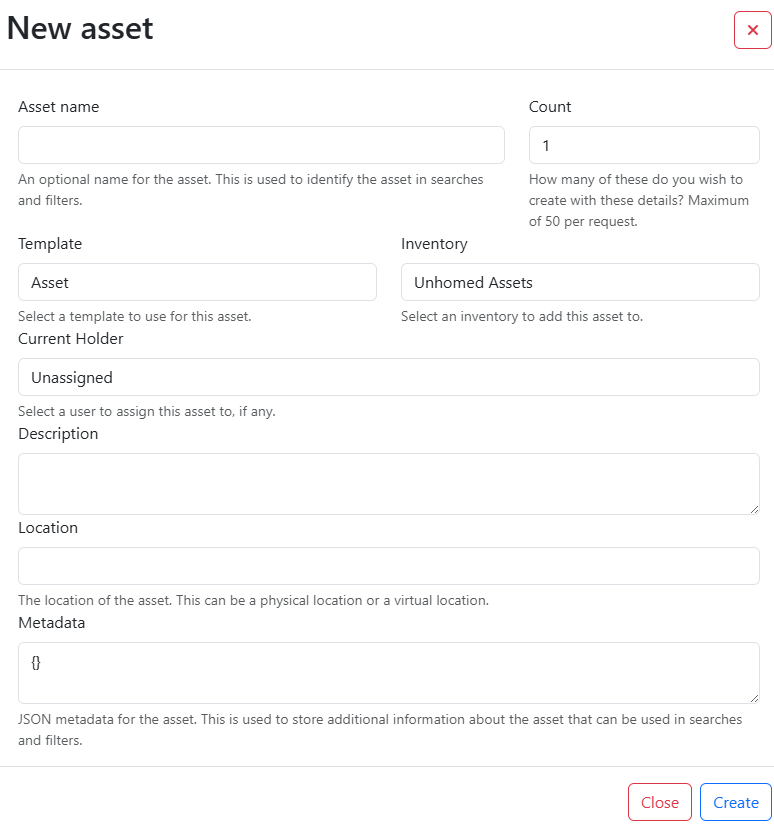
Assets within assets have several key properties:
- An asset template
- An inventory
- An optional name (a friendly tag or association)
- An optional status (one word to describe its state)
- An optional holder who is a custodian for the asset
- An optional description
- An optional location (a word to describe where it is)
- Custom metadata
Based upon these features a custom label will be created for the asset in alignment with the organisation’s label schema. The asset metadata, which takes the form of a JSON object, can be used to hold additional information about an asset, such as key dates, people, places, or features. The asset metadata can be used to construct powerful queries to enhance asset discovery.
Access Control
An account within Lapine Studio’s Assets is required to interact with assets within the program. In addition to this, there are several layers of access control in place:
- Role-based access control configured on the account for a set of permissions within the organisation.
- Role-based access control configured through group membership within groups within Assets.
Assets always belong to a single inventory, and the ability to perform create, read, update, and delete operations is controlled at the inventory level with the exception of Actions.
Actions
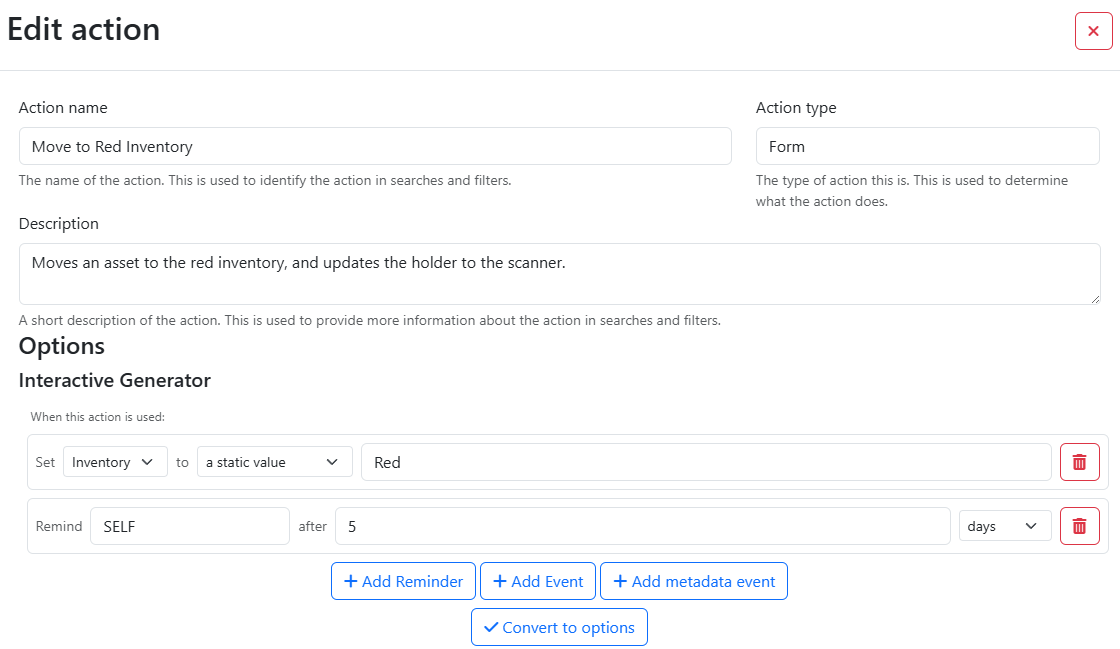
Actions are predefined operations that can occur on assets. Actions allow users to quickly update the status of assets, take ownership of assets, and schedule reminders to release or otherwise act on an asset within a period of time.